
Nautical Distance from Labuan Bajo to Komodo Island
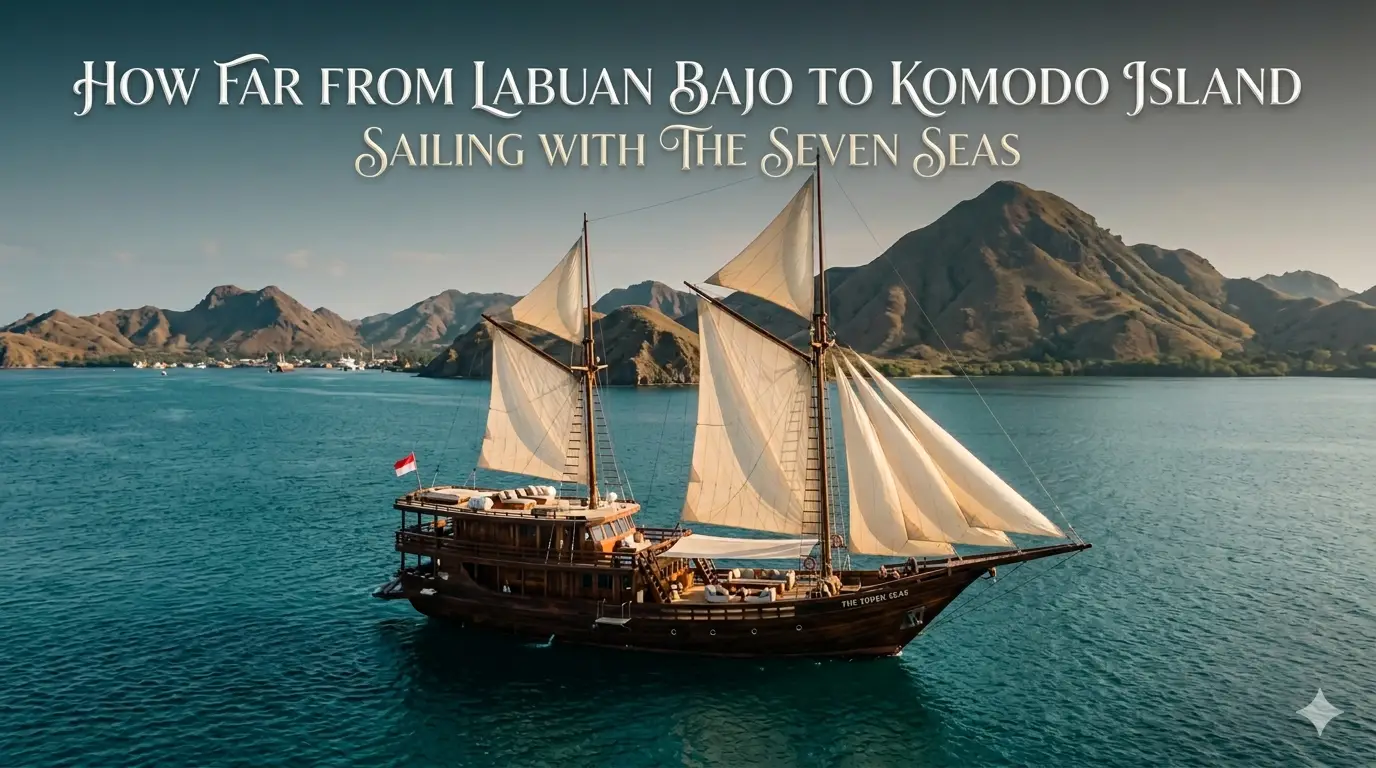
The maritime journey between the harbor of Labuan Bajo and the volcanic landscapes of Komodo National Park represents a significant corridor in the Indonesian archipelago. By the year 2026, the transition from the mainland to the park has evolved from a simple boat ride into a highly regulated, digitally managed expedition. Understanding how far from labuan bajo to komodo island involves more than a measurement of physical distance; it requires a deep dive into nautical dynamics, vessel speeds, and the administrative changes that define modern travel in East Nusa Tenggara.
Geographical Overview of the Flores Sea Corridor
The physical separation between the western tip of Flores and the central attractions of the Komodo archipelago is relatively short when measured linearly, yet the nautical reality is dictated by the sinuous nature of the sea channels. Geographical data points indicate that Komodo Island is situated approximately forty kilometers, or twenty-five miles, from Labuan Bajo when measured as the crow flies. However, the actual route taken by maritime vessels frequently extends this distance to between forty-eight and fifty kilometers to reach the primary docking points on Komodo Island or the surrounding core areas of the park.
The voyage begins at the Labuan Bajo Port, which serves as the logistical epicenter for all maritime expeditions. The route passes through a variety of smaller islands that act as stepping stones across the Flores Sea. This means the effective travel distance can fluctuate based on the specific itinerary and the sequence of island hopping. Reaching the park core area, which includes not only Komodo Island but also Rinca and Padar, requires navigating through channels that are heavily influenced by the currents of the Lintah Strait.
Distance Parameter | Metric Value | Imperial Value |
Straight-line Distance | 40 km | 25 miles |
Average Sea Route Distance | 48.1 km | 30 miles |
Distance to Core Park Area | 35 – 50 km | 22 – 31 miles |
Distance to Kanawa Island | 15 km | 9.3 miles |
Distance to Kelor Island | 10 km | 6.3 miles |
Distance to Kalong Island | 8 km | 5 miles |
The variability in these measurements stems from the specific destination within the 1,733 square kilometer national park. While the namesake Komodo Island is the furthest major destination for most day trips, Rinca Island is slightly closer to the mainland, providing a different perspective on the dragon-watching experience. The nautical distance is further complicated by the seasonal shift in wind and wave patterns, which may force captains to take more sheltered routes during the monsoon transitions.
The Temporal Reality of Maritime Transit
In the context of 2026 travel planning, the time taken to traverse the distance from Labuan Bajo to Komodo Island is often a more critical metric for tourists than the physical distance itself. The duration of the voyage is almost entirely dependent on the class of vessel selected, with modern speedboats and traditional Phinisi schooners offering vastly different temporal experiences.
Speedboat Efficiency and Accessibility
For travelers operating on a limited schedule, the speedboat represents the fastest link between the mainland and the park. Current performance benchmarks for high-performance speedboats indicate a one-way travel time of approximately one to one and a half hours to reach the core areas of Komodo National Park. In many instances, modern vessels can reach top destinations like Padar or Komodo in under an hour if sea conditions are optimal.
The efficiency of the speedboat allows for a six-island-in-one-day itinerary, which has become a staple for foreign tourists seeking to maximize their engagement with the park highlights. These trips typically depart around 06:00 to 07:00 and return before sunset, covering Padar Island, Pink Beach, and Komodo Island within a single daylight window. However, the trade-off for this speed is a reduction in comfort and a more intense, fast-paced atmosphere, as passengers spend most of their transit time seated.
Traditional Wooden Boats and Slow Travel
Conversely, the traditional wooden boats, often referred to as slow boats, offer a more leisurely pace that aligns with the slow travel movement that has gained significant traction. These vessels typically require three to four hours to cover the forty-kilometer distance to Komodo Island. While the duration is significantly longer, these boats are often preferred by budget-conscious travelers or those who view the maritime journey as an integral part of the aesthetic experience.
Luxury Liveaboards and Phinisi Cruises
The Phinisi experience represents a pinnacle in terms of immersion. These vessels do not focus on the speed of the transit; instead, the journey is subdivided into multiple days, often three days and two nights or longer. For a luxury Phinisi like the Seven Seas, the forty-eight-kilometer distance is not covered in a single sprint but is interwoven with diving sessions, sunrise treks, and gourmet dining. The cruising speed of a large Phinisi is approximately eight knots, which ensures a stable and comfortable passage through the Lintah Strait.
Vessel Type | Typical Travel Time One-Way | Best Suited For |
Speedboat | 1 – 1.5 Hours | Day trips and time-constrained travelers |
Shared Day Tour | 1.5 – 3 Hours | Budget social travelers |
Traditional Slow Boat | 3 – 4 Hours | Budget-conscious and relaxed pace |
Phinisi Liveaboard | Multi-day Itinerary | Immersive luxury and diving |
Public Ferry | 2.5 Hours | Independent transfers with daily schedules |
Navigational Challenges of the Lintah Strait
The distance between Labuan Bajo and Komodo Island involves crossing the Lintah Strait, a body of water renowned for its powerful and often unpredictable currents. This strait acts as a narrow funnel between the Flores Sea to the north and the Savu Sea to the south. The hydraulic dynamics of this region are complex, as the tidal flow between the Pacific and Indian Oceans creates a massive movement of water twice daily.
These currents are the primary reason for the incredible marine biodiversity of the region, as they bring nutrient-rich waters to the coral reefs, but they also dictate the navigational distance of any trip. A vessel traveling against a four-knot current will experience a significantly longer and more fuel-intensive journey than one timed with the tide. Experienced captains and local guides plan their departures around these tidal windows to ensure safety and comfort.
The Lintah Strait can produce uncomfortable seas when wind blows against the tide. For travelers prone to seasickness, the choice of vessel becomes paramount. Larger Phinisi ships, such as those measuring forty-five meters, offer greater stability in these choppy waters compared to smaller, lighter speedboats. Professional guides often recommend the use of non-drowsy seasickness medication and suggest traveling during the dry season between April and November.
Navigational Factor | Impact on Travel | Mitigation Strategy |
Tidal Currents | Changes vessel speed and handling | Timing departures with tidal charts |
Wind vs Tide | Creates choppy and unstable waves | Selecting larger and heavy-keeled Phinisi |
Slack Tide | Optimal for diving and snorkeling | Scheduling activities for peak water stillness |
Shallow Reefs | Risks of grounding during low tide | Utilizing depth finders and GPS |
Digital Management and 2026 Access Protocols
The most significant operational shift in 2026 is the implementation of the SiOra digital gatekeeper. Spontaneous travel to the park has effectively ended; tourists must now register with their passport details and secure a digital permit weeks or even months in advance. As of April 1, 2026, the park operates under a strict limit of one thousand visitors per day across all zones.
This quota is comprehensive, covering divers on liveaboards, snorkelers on day trips, and trekkers visiting Komodo Island or Padar Island. The cap is all-inclusive and applies to all the premier dive sites and trekking zones within the national park boundaries. To distribute the crowd throughout the day, the visitor limit is divided into three distinct time sessions :
Session 1: 05:00 to 08:00
Session 2: 08:00 to 11:00
Session 3: 15:00 to 18:00
Foreign visitors must secure their permits through the official SiOra application, which issues a digital QR code that must be scanned at ranger stations. This permit is tied to the identity and the selected travel date of the visitor, making it non-transferable and non-refundable. For many international travelers, the safest process is to book through a verified operator who understands the digital system and can secure the entry allocation in advance.
Financial Considerations for International Tourists
The cost of bridging the distance from Labuan Bajo to the park has been restructured in 2026 into a more consolidated fee system. This change was designed to reduce visitor confusion and streamline park access. The standard park entrance fee for international visitors is IDR 650,000 per person, covering access to Komodo Island and Padar Island.
For itineraries that include Rinca Island, the fee is set higher at IDR 900,000 per person. This consolidated fee includes trekking permits, ranger services, snorkeling access, and conservation contributions for the entire visit. Additional charges apply for specific activities like scuba diving, which incurs a surcharge of IDR 25,000 per day, and harbor fees of IDR 25,000 per person.
Fee Category | Rate in IDR | Frequency |
Standard Route | 650,000 | Per Trip |
Enhanced Route | 900,000 | Per Trip |
Diver Surcharge | 25,000 | Per Day |
Harbour Fee | 25,000 | Per Day |
Drone Permit | 2,000,000 | Per Unit per Day |
Ranger Fee | 120,000 – 200,000 | Per Group up to 5 |
The Seven Seas Luxury Expedition Standards
Within the luxury sailing sector of Labuan Bajo, the Seven Seas has established a reputation for blending traditional Indonesian craftsmanship with world-class expedition standards. This forty-five-meter traditionally built Buginese schooner is specifically designed to handle the long-distance transits and complex current systems of the archipelago.
The vessel features eight staterooms, including four doubles with king-size beds and four twins with large single beds. Every cabin is equipped with en-suite bathrooms, air conditioning, and panoramic views in select upper deck cabins. The ship is run by a well-trained crew of twenty, including two cruise directors, ensuring a crew-to-guest ratio of nearly one-to-one.
The Seven Seas is equipped with state-of-the-art diving equipment, including a large dive deck, three speedboats, and Nitrox availability. The onboard experience is further enhanced by a professional chef who prepares fresh cuisine complemented by a selection of fine wines. This level of luxury ensures that the distance from Labuan Bajo to Komodo Island is not just a transit but a sophisticated journey through one of the most pristine corners of the world.
Vessel Specification | Detail |
Length and Beam | 45 Meters and 8 Meters |
Maximum Guests | 16 in 8 Cabins |
Crew to Guest Ratio | Nearly 1 to 1 |
Cruising Speed | 8 Knots |
Amenities | AC Lounge and Sundeck and WiFi |
Diving Support | Nitrox and 3 Speedboats |
Strategic Itinerary Planning for Global Travelers
Navigating the distance effectively requires a strategic approach to timing and location. Professional guides recommend an early start strategy to avoid the peak crowds and the intense midday sun. Departing Labuan Bajo at 05:00 allows travelers to reach Padar Island for sunrise, providing the best lighting for photography and a more comfortable trekking experience.
The itinerary typically flows to Komodo or Rinca Island for dragon trekking, followed by snorkeling at Pink Beach or Manta Point in the afternoon. The dry season between April and October remains the optimal window for most travelers, as the seas are calm and the terrestrial landscapes offer the iconic savanna aesthetic. April to June is particularly recommended for those seeking lush greenery before the peak dry heat of August.
Choosing between Komodo and Rinca Island is another critical decision. While Komodo is more famous, Rinca often provides a more raw encounter with the dragons, as the trekking trails are more open. The consolidated fee structure reflects these choices, and managed experiences through operators like the Seven Seas allow for tailored schedules that prioritize dive windows or quieter anchorages.
Operational Safety and Expert Recommendations
The Lintah Strait is not a body of water to be taken lightly. Professional tour guides emphasize that safety and local experience are more important than itinerary names. A skilled crew reads the weather, currents, and wildlife behavior better than any brochure, and the best tours are planned around tides rather than fixed clocks.
Travelers are advised to bring non-drowsy seasickness medication, reef-safe sunscreen, and sturdy walking shoes for the treks. Staying hydrated is essential, as the Indonesian sun is intense, and many tours now include hotel pickups to streamline the transition to the harbor. Sustainable tourism efforts continue to grow in Labuan Bajo, and visitors are encouraged to support eco-friendly operators who respect the fragile ecosystem of the national park.
The transformation of Labuan Bajo into a sophisticated global hub has reached its completion, yet the core appeal of the region remains its untouched nature. Whether choosing a one-day speedboat trip for efficiency or a multi-day Phinisi cruise for immersion, the journey from the harbor to the dragons is a passage through time and nature. The distance from labuan bajo to komodo island is a gateway to adventure, and careful planning ensures that every mile is an unforgettable part of the experience.
Geographical Evolution of the Labuan Bajo Gateway
The evolution of Labuan Bajo from a quiet fishing outpost into a sophisticated international travel hub has been fundamental to how the distance to the park is perceived and traversed. In 2026, the logistical infrastructure supporting the voyage has reached a level of unprecedented efficiency. The Komodo International Airport now handles daily direct flights from major hubs such as Jakarta, Bali, Singapore, and Kuala Lumpur, making the initial leg of the journey seamless for global tourists.
The town itself serves as the exclusive entry point, as the islands of the national park are strictly protected and inaccessible by air. This geographic exclusivity has led to the development of a world-class harbor facility in Labuan Bajo, which serves as the departure point for all vessels. The distance from the airport to the harbor is a mere three to five kilometers, ensuring that arriving guests can be on the water within thirty minutes of landing.
The physical route taken by boats is a carefully curated path through the Flores Sea. Most vessels navigate northwest from the harbor, passing the islands of Kelor and Kanawa before entering the core zones of the park. Kanawa Island, located approximately fifteen kilometers from Labuan Bajo, often serves as the first stop for snorkeling and relaxation due to its calm waters and vibrant coral gardens. As vessels move further west, the terrain becomes more rugged, signaling the entrance into the dragon habitats.
Detailed Vessel Mechanics and Maritime Performance
The selection of a vessel fundamentally alters the experience of the forty-kilometer distance. Speedboats, powered by multiple outboard engines totaling eight hundred to one thousand horsepower, are designed for planing over the surface of the water. This mechanical power allows them to ignore many of the surface currents that would slow a displacement hull, maintaining a consistent speed of twenty-five to thirty knots.
In contrast, the Phinisi schooner is a displacement vessel that works in harmony with the sea. These ships, like the Seven Seas, utilize a combination of heavy ironwood hulls and powerful internal diesel engines to provide a stable, vibration-free transit. The eight-knot cruising speed is intentional, allowing guests to absorb the panoramic views of the archipelago without the jarring motion of a high-speed craft. This mechanical difference changes the perception of the distance from a logistical obstacle into a core component of the luxury experience.
For the budget-conscious traveler, the slow boat remains a viable option. These traditional wooden vessels utilize single-cylinder diesel engines that produce a rhythmic chugging sound, traveling at five to six knots. While the journey takes four hours, the open-deck design of these boats provides an unhindered connection to the maritime environment, making the thirty-mile transit feel like a true seafaring adventure.
The Hydrology of the Lintah Strait Corridor
The Lintah Strait is the most technically challenging segment of the voyage. This channel is where the tidal exchange between the Pacific and Indian Oceans is at its most concentrated. During the transition from high to low tide, trillions of gallons of water move through the strait, creating surface ripples and whirlpools that are visible to the naked eye.
Captains must account for the set and drift caused by these currents. A vessel traveling at eight knots against a four-knot current is effectively only moving forward at four knots relative to the seabed. This can double the travel time for slower vessels if they do not time their departure with the ebb or flow of the tide. Professional operators use sophisticated tidal charts and GPS systems to calculate the optimal departure times, often leaving Labuan Bajo precisely when the incoming tide can provide a boost to their transit speed.
The biodiversity of the strait is directly linked to this hydrology. The strong currents prevent sediment from settling on the reefs, ensuring that the coral remains healthy and vibrant. This is why dive sites within the Lintah Strait, such as Batu Bolong and Tatawa Besar, are considered among the best in the world. The distance from Labuan Bajo to Komodo Island is thus a transit through one of the most productive marine environments on Earth.
Environmental Stewardship and the 1,000 Visitor Cap
The implementation of the one thousand visitor daily quota in 2026 is a milestone for environmental preservation in Indonesia. This policy was born from a need to balance the rapid growth of tourism with the long-term survival of the Komodo dragon and its habitat. Before the cap, peak daily attendance often exceeded three thousand visitors, leading to trail erosion and stress on the wildlife.
The SiOra app manages this quota with digital precision. Every visitor is assigned a specific time window for their activities, whether they are trekking on Padar or diving at Manta Point. This prevents the clustering of boats and tourists at any single location, ensuring that the experience remains intimate and respectful of the surroundings. For the international tourist, this means that the national park feels less like a crowded attraction and more like a pristine wilderness.
Rangers play a critical role in this system. A guide is mandatory for all land activities, and they are trained not only in safety but in environmental education. They ensure that visitors maintain a safe distance from the dragons and follow the principles of Leave No Trace. This managed access ensures that the beauty of the park is preserved for future generations, making the distance from the mainland a transition into a sanctuary of global importance.
Financial Dynamics of the 2026 Tourism Model
The 2026 fee structure is designed to be all-encompassing, providing a clear and transparent cost for international visitors. The consolidation of fees into a single IDR 650,000 or IDR 900,000 ticket has significantly reduced the friction at ranger stations. These funds are utilized for park maintenance, ranger salaries, and community development projects in the surrounding villages.
For the traveler, this means that the "cost of distance" is paid once, allowing for a stress-free exploration of the islands. However, it is important to note that certain activities still require specific permits. Drone photography, which has become immensely popular, is strictly regulated to protect the peace of the park and the safety of its wildlife. The IDR 2,000,000 daily permit is a significant investment but is necessary for those wishing to capture the iconic aerial views of Padar Island and Pink Beach.
The economic impact of this model is felt throughout Labuan Bajo. The town has seen a surge in high-end accommodation and dining options, catering to the travelers who seek the comfort and exclusivity of the new managed access system. The distance to the park has thus become a value-added journey, where the high standards of the mainland are mirrored by the professional management of the national park.
The Seven Seas Expeditionary Excellence
The Seven Seas represents the gold standard for luxury maritime travel in the region. As a Buginese schooner, it carries the heritage of centuries of Indonesian seafaring, updated with twenty-first-century luxury. The ship’s construction from ironwood and teak provides a warmth and aesthetic that cannot be replicated by modern composite materials.
Each stateroom is a sanctuary, providing a private space to retreat after a day of exploration. The en-suite bathrooms are fitted with high-pressure showers and hot water, a luxury that is rare in the remote corners of the archipelago. The main lounge and dining area are climate-controlled, providing a cool respite from the tropical heat while still offering panoramic views through large, operable windows.
The culinary experience on the Seven Seas is a highlight of the voyage. The professional chef utilizes local ingredients to create a fusion of Indonesian and international flavors, served in a buffet style that encourages social interaction among guests. This attention to detail extends to the diving and snorkeling operations, where expert guides ensure that every guest can explore the underwater world safely and with a high degree of personalization.
Detailed Destination Profiles in the National Park
Each island within the park offers a unique character and set of activities. Padar Island is the most iconic, known for its three-colored bays and the steep trek to its central summit. The viewpoint provides a 360-degree vista of the park, and in 2026, the early morning session remains the most coveted for its cooler temperatures and golden light.
Komodo Island and Rinca Island are the primary dragon habitats. Trekking on these islands is a guided experience, where visitors walk through savanna and forest to spot the world's largest lizards in their natural environment. The dragons are most active in the morning, making the early sessions ideal for sightings.
Pink Beach, or Pantai Merah Muda, gets its unique color from pulverized red coral fragments mixed with white sand. It is one of only a few such beaches in the world and offers world-class snorkeling just a few meters from the shore. Manta Point and Taka Makassar are nearby marine highlights, where travelers can swim with giant manta rays or explore a pristine sandbar in the middle of the turquoise sea.
Practical Logistics for International Arrivals
Planning a trip to Komodo requires careful attention to the logistics of arrival and departure. Most international travelers arrive via Bali, taking one of the many daily flights to Labuan Bajo. It is recommended to arrive at least one day before a scheduled boat departure to allow for any flight delays and to explore the local culture of Labuan Bajo.
Packing for the journey should include lightweight, breathable clothing, a wide-brimmed hat, and high-SPF sunscreen. Sturdy walking shoes or hiking sandals are essential for the treks on Padar and Komodo, as the terrain is rocky and can be slippery. For those planning to dive, bringing a personal mask and dive computer is recommended, though high-quality rental gear is available on vessels like the Seven Seas.
The best time to visit remains the dry season, specifically from April to November. During this period, the visibility for diving is at its peak, and the sea conditions are the most reliable. However, even during the shoulder seasons, the park offers a unique beauty, with lush green landscapes and fewer crowds for those who are willing to risk an occasional tropical rain shower.
Sustainable Tourism and the Future Outlook
The future of Komodo National Park is one of managed growth and environmental resilience. The 2026 policies have set a global precedent for how sensitive ecological sites can be protected while still allowing for high-quality tourism. The move toward slow travel and immersive liveaboard experiences is a key part of this strategy, as it reduces the daily pressure on the park's entry points and encourages a deeper understanding of the region's natural history.
Travelers are now seen as partners in conservation. The fees they pay and the regulations they follow are the direct mechanisms that fund the protection of the Komodo dragon and the restoration of the coral reefs. This symbiotic relationship between the tourism industry and the national park office ensures that the distance from Labuan Bajo to Komodo Island remains a passage into a world that is as pristine and wild as it was centuries ago.
The commitment of operators like the Seven Seas to these principles is absolute. By providing a platform for exploration that is both luxurious and respectful of the environment, they ensure that their guests leave with more than just photos—they leave with a profound appreciation for the fragility and beauty of the Indonesian archipelago. The journey is no longer just about reaching a destination; it is about the stewardship of one of the world's most extraordinary natural treasures.
Comprehensive Analysis of Travel Times and Efficiency
The temporal distance between Labuan Bajo and the park core is a function of both vessel mechanics and environmental conditions. While the forty-kilometer distance is a constant, the time required to bridge it is highly variable. Speedboats represent the pinnacle of logistical efficiency, enabling a full exploration of the park highlights within a single ten-hour window. These vessels typically cruise at speeds that compress the transit to just over an hour, allowing for more time on the islands and less time in transit.
For the liveaboard traveler, time is a luxury to be spent. The Phinisi does not rush the distance; it savors it. A three-day itinerary provides over seventy hours of immersion in the park, compared to the few hours of on-island time offered by a day trip. This allows for activities that are impossible on a day trip, such as watching the sunset from Kalong Island as thousands of flying foxes take to the sky, or waking up to a sunrise over the silent hills of Rinca.
Efficiency in 2026 is also measured by digital seamlessness. The SiOra app has eliminated the queues at the harbor and the ranger stations. By pre-registering and paying all fees online, travelers can move directly from their boat to the trekking trails or dive sites. This digital transformation has increased the effective time spent enjoying the park, making the journey from Labuan Bajo feel even more direct and accessible.
Navigational Safety and Emergency Protocols
Safety remains the paramount concern for any maritime voyage. The Lintah Strait and the surrounding waters are monitored by local authorities to ensure that all vessels adhere to strict safety standards. Every reputable boat is equipped with life jackets, fire extinguishers, and first aid kits as a minimum requirement. Larger vessels like the Seven Seas go beyond these standards, carrying advanced medical equipment such as oxygen kits and AEDs.
Crew training is a critical component of safety. The crew on a luxury Phinisi is trained in emergency response, including man-overboard drills and fire suppression. For divers, the availability of Nitrox and the proximity of speedboats for immediate pickup are vital safety features that mitigate the risks associated with the region's strong currents.
Weather monitoring has become highly sophisticated in 2026. Captains utilize satellite data and local meteorological stations to track storms and wind shifts in real-time. If conditions become unsafe, the decision to remain in port or seek a sheltered anchorage is made with absolute priority for guest safety. This professional approach to navigation ensures that the distance to Komodo is always traversed with the highest degree of security.
The Cultural Landscape of Labuan Bajo
While the national park is the primary draw, the town of Labuan Bajo has developed its own unique cultural identity. As the gateway to the park, it has become a melting pot of Indonesian cultures and international influences. The transformation of the town has included the development of high-end dining, boutique shopping, and a vibrant arts scene.
Travelers often find that their time in Labuan Bajo is a significant part of the overall experience. The town offers spectacular sunset views from Sylvia Hill and Amelia Hill, providing a terrestrial perspective of the islands they are about to explore. The local seafood market remains a favorite for its authentic atmosphere and fresh-off-the-boat produce.
The interaction between the town and the park is a vital economic link. The jobs created by the tourism industry, from boat building to hospitality and guiding, have transformed the local economy. This socio-economic growth has also led to a greater awareness of environmental conservation among the local population, as they see the direct benefits of protecting their natural heritage.
Final Summary of the Journey
The voyage from Labuan Bajo to Komodo Island is a testament to the beauty and complexity of the Indonesian archipelago. The physical distance of forty to fifty kilometers is a conduit between the modern world and an ancient, volcanic wilderness. Through the use of advanced vessels, digital management, and professional expertise, this journey has become more accessible and sustainable than ever before.
For the international traveler, the choice of how to traverse this distance is a personal one. Whether it is the high-speed efficiency of a modern boat or the immersive luxury of a traditional Phinisi, the destination remains one of the most extraordinary places on Earth. The dragons, the pink sands, and the vibrant reefs are the rewards for a journey well-planned and a distance well-traveled.
As the sun sets over the Flores Sea, casting long shadows across the hills of Komodo, the significance of the journey becomes clear. It is not just about the distance; it is about the transition into a space where nature still reigns supreme. The distance from labuan bajo to komodo island is a bridge to a world of wonder, and for those who make the voyage, it is a journey that will stay with them for a lifetime.