
Seasonal Fluctuations in the Labuan Bajo Solar Cycle
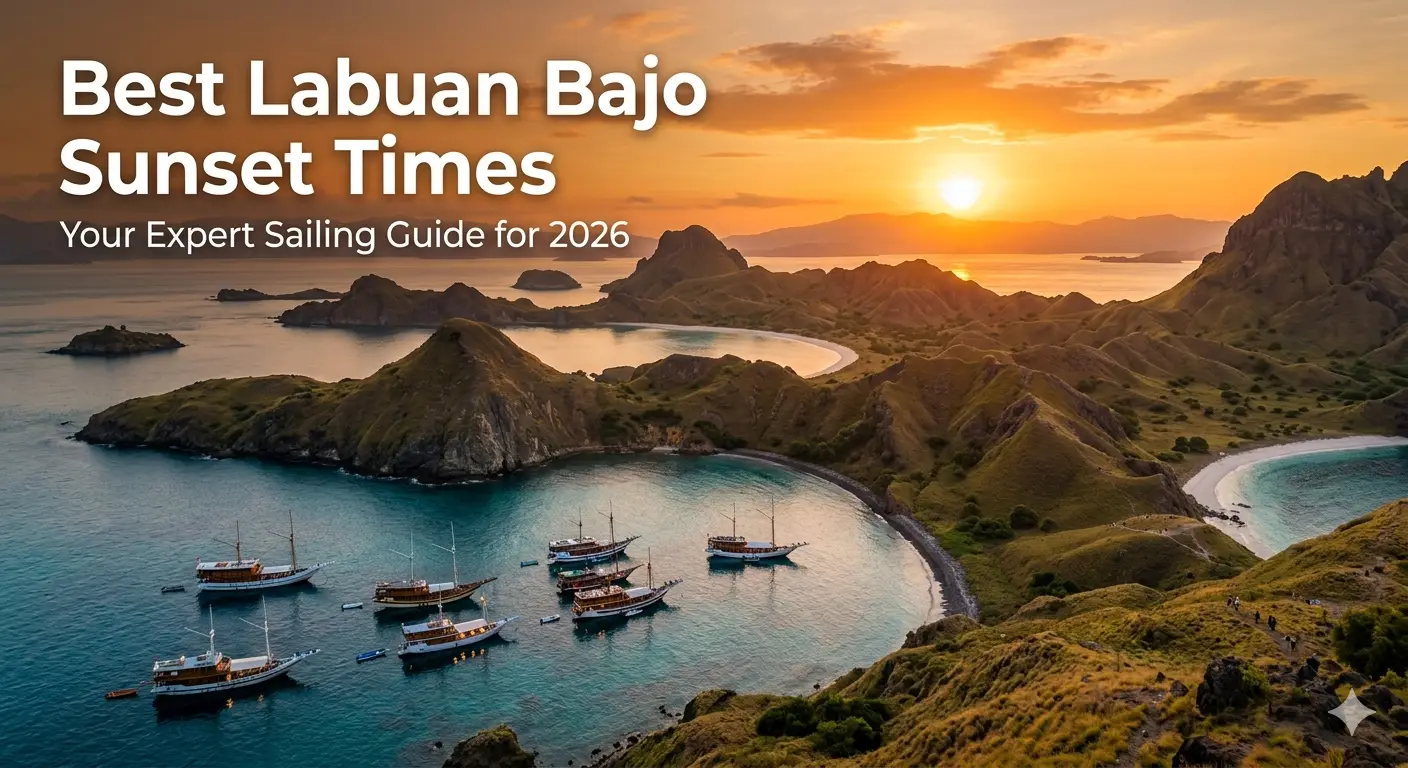
Labuan Bajo is situated approximately eight degrees south of the equator, which ensures that the length of the day remains relatively consistent throughout the year. However, the minor variations that do occur have significant impacts on the visibility and quality of the twilight period. Travelers often inquire about what time sunset Labuan Bajo takes place because the window of the golden hour can shift by nearly an hour between the solstices. During the peak of the dry season in the middle of the year, the sun sets at its earliest points, while the end of the year sees the sun lingering longer in the sky.
The transition from the wet season to the dry season, which typically occurs between March and April, brings about a noticeable change in atmospheric clarity. This clarity is essential for the high-contrast light that photographers seek. In 2026, the data indicates that the solar cycle follows a predictable but shifting pattern.
Sunset and Sunrise Schedules for the First Half of 2026
The following table provides the average timings for the fifteenth day of each month during the first half of the year, providing a reliable guide for what time sunset Labuan Bajo occurs during the rainy and transition seasons.
Month | Sunrise | Sunset | Total Daylight |
|---|---|---|---|
January | 5:52 AM | 6:26 PM | 12h 34m |
February | 5:46 AM | 6:08 PM | 12h 22m |
March | 6:06 AM | 6:16 PM | 12h 10m |
April | 5:45 AM | 5:40 PM | 11h 55m |
May | 6:05 AM | 5:48 PM | 11h 43m |
June | 6:11 AM | 5:49 PM | 11h 38m |
The data reveals that the latest sunsets of the year are found in January, coinciding with the peak of the monsoon season. While the rain can occasionally obscure the horizon, the moisture in the air often leads to dramatic, multi-colored skies when the clouds break. By contrast, the sunsets in April and May begin to occur much earlier, often before 6:00 PM, as the region moves toward the winter solstice of the Southern Hemisphere.
Sunset and Sunrise Schedules for the Second Half of 2026
As the year progresses into the peak dry season and the subsequent return of the rains, what time sunset Labuan Bajo happens continues to evolve. The following table summarizes the solar data for the latter half of 2026.
Month | Sunrise | Sunset | Total Daylight |
|---|---|---|---|
July | 6:16 AM | 5:56 PM | 11h 40m |
August | 6:14 AM | 6:32 PM | 12h 17m |
September | 5:54 AM | 5:57 PM | 12h 03m |
October | 5:39 AM* | 5:55 PM* | 12h 16m |
November | 5:31 AM | 6:00 PM | 12h 30m |
December | 5:36 AM | 6:13 PM | 12h 37m |
Note that specific dates in October and November may experience the earliest sunrises of the year, which is a vital consideration for those planning early morning treks to the Padar Island summit.
Professional guides emphasize that the best light for photography often occurs in the thirty minutes following the actual sunset time. This period, known as civil twilight, is when the sky transitions through shades of deep magenta, royal blue, and soft gold. In 2026, many boat operators have adjusted their dinner schedules to allow guests to remain on the top deck during this entire transition.
The Bat Migration at Kalong Island
For many visitors, the highlights of a sailing trip Labuan Bajo are defined by the evening stop at Kalong Island. This small, mangrove-covered isle is home to a massive colony of flying foxes, or giant fruit bats, which take flight every evening in search of food on the Flores mainland. The timing of this exodus is intrinsically linked to the solar cycle. When travelers ask what time sunset Labuan Bajo occurs, they are often specifically looking for the moment the bats begin their migration.
The first scouts of the colony typically appear just as the sun touches the horizon, with the massive waves of bats following within ten to fifteen minutes. This event generally takes place between 5:45 PM and 6:15 PM, depending on the month. The spectacle lasts for approximately thirty to forty five minutes, during which the sky is filled with thousands of silhouettes against a backdrop of orange and violet light.
Optimal Boat Positioning for Kalong Island
The experience at Kalong Island is conducted exclusively from the water to protect the delicate mangrove habitat and the wildlife within. Professional boat captains utilize specific anchoring techniques to ensure that their guests have an unobstructed view of the western sky. A well-positioned vessel will drop anchor approximately 100 to 200 meters from the shoreline, ensuring that the bats fly directly overhead or across the bow of the ship.
Deck Position | Viewing Quality | Reason |
|---|---|---|
Top Sun Deck | Excellent | Unobstructed 360-degree view of the sky and horizon |
Bow (Front) | Good | Direct view of the bats' primary flight path |
Stern (Rear) | Moderate | May be partially obscured by the masts or rigging |
Side Rails | Good | Stable position for handheld photography with support |
Guides recommend that guests maintain a level of silence during the migration. Excessive noise from the boat's sound system or loud conversations can disturb the animals, potentially altering their flight patterns. In 2026, park rangers have become more active in monitoring boat behavior at Kalong Island, ensuring that all vessels maintain a respectful distance from the roosting sites.
Padar Island and the 2026 Digital Regulations
The most iconic viewpoint in the Komodo National Park is found on Padar Island, where a short but steep trek leads to a summit overlooking four different bays. In 2026, the management of this site has been fundamentally altered by the introduction of the SiORA digital permit system and a strict daily visitor quota of 1,000 people. For those interested in the sunset trek, the timing is dictated by both the solar cycle and the assigned entry sessions.
The daily quota is divided into three sessions to prevent the overcrowding that was common in previous decades. For sunset enthusiasts, the most important window is Session 3, which runs from 15:00 to 18:00 local time (WITA). Arriving during this session allows travelers to complete the hike and reach the summit in time for the golden hour, while also benefiting from the cooler temperatures of the late afternoon.
The SiORA Permit Process for International Travelers
Securing a slot for the Padar Island sunset hike requires advance planning. The SiORA app serves as the official platform for all park reservations, and spontaneous walk-in visits are no longer permitted. International visitors must provide their passport details during the registration process, and the permits are non-transferable and date-specific.
Session Number | Time Range (WITA) | Maximum Capacity |
|---|---|---|
Session 1 | 05:00 - 08:00 | 333 Visitors |
Session 2 | 08:00 - 11:00 | 333 Visitors |
Session 3 | 15:00 - 18:00 | 334 Visitors |
While individuals can navigate the SiORA app independently, most professional sailing trip Labuan Bajo operators handle the permit acquisition as part of their comprehensive service package. This is highly recommended because the app can be technically challenging for foreign users due to payment gateway restrictions that sometimes prioritize local bank accounts. Booking through a licensed operator ensures that the Session 3 slot is confirmed well in advance, which is critical during the peak season from June to September when quotas are often reached months ahead of time.
Choosing the Right Vessel for Twilight Cruising
The platform from which one observes the sunset significantly influences the overall experience. The waters around Labuan Bajo are filled with various classes of vessels, each offering different amenities and perspectives. The traditional Phinisi boat remains the gold standard for those seeking an authentic and comfortable maritime journey. These wooden schooners, built using techniques recognized by UNESCO, provide multiple deck levels that are ideal for social sunset gatherings or private reflection.
Comparison of Vessel Classes for Sunset Viewing
Travelers must decide between different levels of luxury and boat sizes when booking their sailing trip Labuan Bajo. The quality of the sun deck and the stability of the vessel are key factors for those who prioritize photography and comfort.
Boat Category | Average Capacity | Facilities | Sunset Viewing Advantage |
|---|---|---|---|
Regular Boat | 12 - 20 Pax | Shared cabins, simple decks | Social atmosphere, more affordable |
Deluxe Phinisi | 8 - 14 Pax | Private AC cabins, bean bags | Spacious sun decks, better stability |
Luxury Yacht | 2 - 8 Pax | En-suite suites, private chef | Total privacy, gourmet dining on deck |
Speedboat | 10 - 25 Pax | Seating only, no cabins | Fast transit, but limited viewing space |
Deluxe and Luxury Phinisi vessels often feature Bean bags and lounge areas specifically designed for the golden hour. These boats move at a slower, more rhythmic pace (6 to 9 knots), which allows guests to fully absorb the changing colors of the landscape without the vibration and noise associated with high-speed motor yachts. For those traveling as a couple or celebrating a milestone, a private charter provides the flexibility to adjust the boat's orientation to perfectly capture the sun's descent behind the peaks of Komodo Island.
Photography Techniques for Maritime Twilights
Capturing the essence of a Labuan Bajo sunset from a moving boat or a steep island summit presents unique challenges that require specific technical preparation. Professional photography guides in the region suggest a versatile equipment setup that can handle both grand landscapes and the low-light demands of the bat migration.
Essential Camera Gear for the Komodo Archipelago
The environment at sea is characterized by high humidity, salt spray, and constant motion. Protecting expensive optics is the first priority for any photographer on a sailing trip Labuan Bajo. Dry bags and silica gel packs are essential for preventing moisture buildup inside camera bodies and lenses.
For capturing the sunset at Kalong Island, a telephoto lens with a focal length of at least 200mm is recommended to isolate the silhouettes of the bats against the sky. Because the boat will be subject to the motion of the waves, a fast shutter speed is mandatory even as the light fades. Maintaining a shutter speed of at least 1/1000 of a second helps freeze the motion of the flying foxes and the vibration of the vessel.
Lighting and Exposure Strategies
As the sun disappears, the dynamic range of the scene can exceed the sensor's capabilities. Utilizing a polarizing filter is a common technique used by local professionals to reduce glare from the water and deepen the blues of the sky. Once the sun has set, the light becomes softer and more even, which is the ideal time for portraits on the boat deck.
Compositional elements such as the masts, the rigging, or the silhouette of a fellow traveler on the bow can provide a sense of scale and narrative to the image. Many photographers also find that low-angle shots from the water's surface, taken from the boat's tender, can create unique perspectives that are not possible from the main vessel's deck.
Nautical Terminology and Harbor Etiquette
Interacting with the professional crew of a Labuan Bajo sailing vessel is enhanced by a basic understanding of nautical language and the traditional maritime culture of the region. The guides and sailors who operate these trips are often members of the Indonesian Tourist Guide Association (HPI) and have spent years mastering the currents of the Komodo Strait.
Common Terms Used During a Sailing Trip
Nautical Term | Local Context | Meaning |
|---|---|---|
Bow | Front of the boat | The primary area for dolphin watching and sunset viewing |
Stern | Rear of the boat | Often where the galley and dining areas are located |
Port | Left side | Marked by red navigation lights |
Starboard | Right side | Marked by green navigation lights |
Underway | In motion | When the vessel is no longer anchored or docked |
Tender | Small skiff | Used for moving between the Phinisi and the shore |
In the traditional Phinisi culture, the raising of the mainsail is a ceremonial event that signals the beginning of a passage under wind power. While modern boats utilize engines for most transits to ensure adherence to schedules, the opportunity to sail silently through the park remains a highlight for many.
The Concept of Rubber Time in Flores
International travelers should be prepared for "Jam Karet" or rubber time, which is a significant part of the local social fabric. While tour operators strive for punctuality, the natural conditions of the sea often dictate the pace of travel. Tides, currents, and sudden weather changes can lead to adjustments in the itinerary. Embracing this flexible approach to time allows for a more relaxed and authentic experience, where the journey is as important as the destination.
Cultural Respect and Environmental Stewardship
Komodo National Park is a UNESCO World Heritage site and a delicate ecological treasure. The influx of tourism has necessitated strict rules regarding visitor behavior to ensure the survival of the Komodo dragons and the health of the coral reefs. Every participant in a sailing trip Labuan Bajo has a responsibility to minimize their impact on the environment.
Protecting the Marine Ecosystem
The coral reefs of the park are among the most biodiverse in the world, but they are highly susceptible to chemical damage. Travelers are required to use reef-safe sunscreen that does not contain oxybenzone or octinoxate. Furthermore, most professional boats have adopted a zero-plastic policy, providing large water dispensers for refilling reusable bottles rather than providing single-use plastic containers.
Environmental Rule | Action Required | Reason |
|---|---|---|
Sunscreen Use | Use reef-safe biodegradable products | Prevents coral bleaching and chemical toxicity |
Waste Management | Bring all trash back to the boat | Protects beaches and prevents ingestion by marine life |
Wildlife Interaction | Maintain 5-10 meter distance | Safety for visitors and avoids stressing animals |
Trail Adherence | Stay on marked paths at Padar | Prevents soil erosion and protects fragile flora |
Engaging with Local Communities
A visit to the traditional fishing villages on Komodo Island or Rinca Island provides a glimpse into a way of life that has existed for centuries. Travelers are encouraged to dress modestly, covering their shoulders and knees when entering these communities. Learning a few basic phrases in Bahasa Indonesia, such as "Terima kasih" (thank you) or "Selamat sore" (good evening), can foster a sense of mutual respect and friendship with the local residents.
Safety Protocols in the Komodo Strait
The waters surrounding Labuan Bajo are famous for their powerful currents, which can reach speeds of up to four knots. While these currents are what bring the nutrient-rich water necessary for the diverse marine life, they also present significant safety risks for the unprepared. Professional sailing operators prioritize safety through rigorous training and equipment standards.
Weather Monitoring and Vessel Maintenance
Captains in Labuan Bajo utilize reports from BMKG, the national meteorological agency, to plan their movements and avoid adverse weather conditions. Before any departure, a series of routine checks are performed on the vessel's engines, communication systems, and emergency equipment.
For guests, the most important safety rule is to follow the instructions of the crew at all times. This includes wearing life jackets during boat transfers and during the transit to dive or snorkel sites if conditions are choppy. Those prone to seasickness should consult with the crew about the best areas of the boat to minimize motion, which is typically found mid-ship near the center of gravity.
Planning the Ultimate Golden Hour Itinerary
To maximize the opportunities for seeing the sunset in various settings, a three-day sailing trip Labuan Bajo is widely considered the optimal duration. This timeframe allows the vessel to reach the more remote parts of the park while maintaining a relaxed and enjoyable pace.
A Typical Three Day Sunset Sequence
On the first day of a classic liveaboard voyage, the boat often anchors at Kalong Island. This timing is designed to ensure that guests are settled on the deck with refreshments just as the bat migration begins. The experience of seeing the sun set while thousands of creatures fill the air is a profound introduction to the wilderness of the park.
The second day is frequently centered around the geological wonders of Padar Island. By scheduling the trek for the late afternoon (Session 3), visitors can capture the sun's descent behind the mountains of Komodo Island, which creates a dramatic silhouette against the twilight sky. This session also provides the unique opportunity to watch the stars begin to appear over the dark ocean as the trek concludes.
The final day often involves a slower pace, with stops at sandbanks like Taka Makassar. The shallow, clear water provides a mirror-like surface that reflects the colors of the early evening, offering a peaceful conclusion to the maritime adventure. By the time the boat returns to the Labuan Bajo harbor, travelers have seen the sunset from three distinct perspectives: the wildlife drama of Kalong, the high-altitude panorama of Padar, and the aquatic serenity of the open sea.
Practical Logistics for International Visitors
Reaching Labuan Bajo has become increasingly efficient due to the expansion of Komodo International Airport. Direct flights are available daily from major hubs such as Jakarta, Bali, and Surabaya. Upon arrival, the transition from the airport to the harbor takes less than fifteen minutes, allowing travelers to begin their adventure almost immediately.
Budgeting for Park Fees and Services
While the base cost of a sailing trip Labuan Bajo covers accommodation and meals, international visitors should budget separately for the mandatory national park fees. These fees are subject to change but have remained relatively stable as of early 2026.
Expense Item | Estimated Cost (IDR) | Note |
|---|---|---|
Marine Park Ticket | 250,000 per day | Mandatory for all foreign nationals |
Harbour Fee | 25,000 per trip | Collected at the port of departure |
Padar Trekking Fee | 150,000 per group | Shared between up to five guests |
Ranger Fee (Dragons) | 200,000 per group | Required for all land treks with wildlife |
Scuba Surcharge | 25,000 per day | Additional fee for certified divers |
Carrying a small amount of local currency (Indonesian Rupiah) in cash is highly recommended for small purchases in villages or for tipping the boat crew and park rangers. While Labuan Bajo town has numerous ATMs, these are not available once the vessel has entered the national park boundaries.
The Evolution of Travel SEO and Authentic Content
In the digital landscape of 2026, the way travelers find information about what time sunset Labuan Bajo occurs has shifted toward a preference for high-expertise, experience-based content. Search engines now prioritize the insights of individuals who have a deep, physical connection to the destinations they describe. This shift, governed by the E-E-A-T framework, means that the most successful travel resources are those that provide "receipts" of their presence.
Demonstrating Expertise Through Guided Insights
A professional guide from a sailing trip Labuan Bajo provides value that cannot be replicated by automated content generators. By describing the specific scent of the sea breeze during the transition to the dry season, or the exact sound of the flying foxes as they emerge from the mangroves, a guide establishes a level of trust and authority that resonates with both human readers and search algorithms.
For a website to rank effectively in 2026, it must avoid generic descriptions and instead focus on solving the specific logistical problems faced by modern travelers. This includes providing clear, updated guidance on navigating the SiORA app, choosing between boat classes, and understanding the complex fee structures of the national park. This detailed, practical information is what defines the next generation of helpful travel content.
Visual First SEO and Mobile Optimization
The visual nature of Labuan Bajo's sunsets makes the region a prime subject for the visual-first SEO strategies of 2026. High-quality, original photography and short-form video content are essential for capturing the attention of the mobile-dominated travel market. These assets must be optimized for fast loading and include specific metadata that proves the time and location of the capture, serving as a further signal of authenticity.
Ensuring that a website meets the strict technical standards of 2026, such as a Largest Contentful Paint (LCP) of under 2.5 seconds, is critical for maintaining visibility in a competitive digital environment. By combining these technical optimizations with the rich, lived experience of a professional sailing guide, a brand can establish itself as a definitive source of truth for anyone planning a journey to the heart of Indonesia's volcanic archipelago.
The nightly performance of the sun over the Flores Sea remains the emotional center of the Labuan Bajo experience. While the administrative methods of visiting have become more digital and structured, the raw beauty of the light falling across the crescent beaches of Padar or the silhouetted wings of the bats at Kalong remains unchanged. For the global traveler, understanding the timing and the logistics of these moments is the key to an adventure that is both seamless and profoundly memorable. The archipelago continues to offer a rare opportunity to connect with the wilder rhythms of the natural world, provided one knows where to stand and when to look toward the horizon.