
What religion is Labuan Bajo and how its spiritual identity was shaped over time
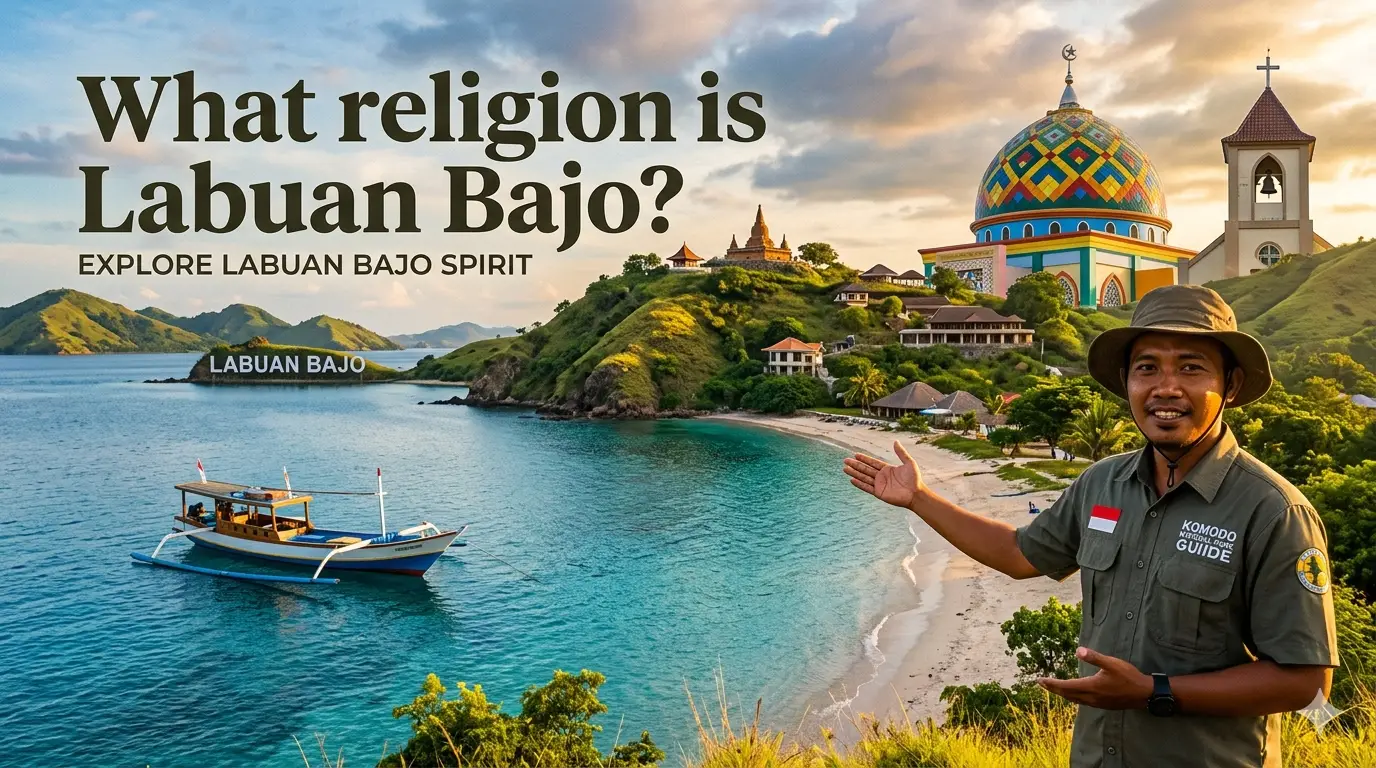
For many travelers arriving at the western edge of Flores Island, a question often comes to mind what religion is Labuan Bajo. It is a simple question, yet the answer reveals a layered and deeply rooted story that goes far beyond a single belief system.
Labuan Bajo is widely known as the gateway to Komodo National Park, but what many visitors discover after arriving is that the town holds a cultural and spiritual identity unlike most places in Indonesia. In a country where Islam is the dominant religion, Labuan Bajo presents a different reality. Church towers are a common sight across the landscape, while mosques stand close to the shoreline, and traditional beliefs continue to live quietly within local communities.
This coexistence is not something new or superficial. It is the result of centuries of interaction between indigenous traditions, maritime trade networks, and European missionary influence. Understanding what religion is Labuan Bajo means understanding how all of these elements came together to form a balanced and harmonious society.
The religious composition of West Manggarai
To fully understand what religion is Labuan Bajo, it is important to look at the broader region of West Manggarai, where the town serves as the administrative center. The demographic structure clearly shows the dominance of Catholicism, while also highlighting the presence of other religions that continue to shape the local identity.
Below is the full distribution of religion in West Manggarai based on recent data
Religion | Percentage in West Manggarai | Primary Social Role |
|---|---|---|
Catholicism | 77.76% | Foundation of local education and rural social structures |
Islam | 21.39% | Dominant in maritime trade and coastal fishing culture |
Protestantism | 0.80% | Represented in urban centers and migrant communities |
Hinduism | 0.04% | Present in expatriate and hospitality sectors |
These numbers are not just statistical information. They reflect how daily life is organized across the region. In many inland villages, Catholicism shapes social structure, community gatherings, and education. Meanwhile, in coastal areas, Islamic traditions are closely tied to fishing, trade, and maritime life.
The contrast between inland and coastal communities creates a unique cultural dynamic. Labuan Bajo itself becomes a meeting point where these different identities interact, making it one of the most diverse small towns in eastern Indonesia.
Historical roots behind the Catholic majority
The question of what religion is Labuan Bajo cannot be separated from the historical influence of European missionaries, particularly those from Portugal. In the sixteenth century, Portuguese explorers arrived in Flores and began spreading Catholicism alongside their trade activities.
Their approach went beyond religious conversion. They established schools, introduced new systems of education, and built early healthcare facilities. Over time, these institutions became central to community life, allowing Catholicism to grow not only as a belief system but also as a social foundation.
Even when colonial control shifted to the Dutch, the Catholic Church maintained its presence. Agreements made during that period allowed Catholic missions to continue operating, which helped preserve their influence across generations. This continuity explains why Flores, including Labuan Bajo, remains one of the strongest Catholic regions in Indonesia today.
The role of Islam in shaping the coastal identity
While Catholicism dominates inland areas, understanding what religion is Labuan Bajo also requires looking at the coastal history of the town. Long before the arrival of European missionaries, Muslim seafarers such as the Bajo and Bugis people had already established settlements along the western coast of Flores.
These communities lived closely connected to the sea. They built houses on stilts, relied on fishing and trade, and developed networks that linked Flores to other islands such as Sulawesi and Sumbawa. Through these interactions, Islam became deeply rooted in the coastal culture of Labuan Bajo.
Today, this influence is still visible in daily life. Mosques serve as important community centers, and many families continue traditions that reflect their maritime heritage. The presence of Islam adds another layer to the identity of Labuan Bajo, making it more than just a Catholic-majority region.
Indigenous beliefs and the Manggarai worldview
Another important dimension in answering what religion is Labuan Bajo lies beneath formal religious identities. The Manggarai people, who form the majority ethnic group in the region, have long held a belief system that emphasizes harmony between humans, nature, and the spiritual world.
This worldview is often referred to as Mori Keraeng. It teaches that the universe is interconnected and that natural elements carry spiritual significance. Forests, land, and even stones are seen as part of a larger system that must be respected and maintained.
What makes Labuan Bajo particularly unique is how these indigenous beliefs have not disappeared but instead coexist with Catholicism. In many cases, traditional rituals are performed alongside church ceremonies, creating a form of spiritual expression that blends old and new traditions into a single cultural identity.
Religious harmony in everyday life
One of the most remarkable aspects of Labuan Bajo is how different religious communities interact with one another. Asking what religion is Labuan Bajo is not only about identifying the majority, but also about understanding how these differences are managed in daily life.
In many communities, cooperation across religious lines is common. People participate in each other's events, help build places of worship, and share responsibilities during important occasions. This spirit of mutual support is rooted in local values that emphasize unity over division.
The peaceful coexistence of religions in Labuan Bajo is not accidental. It is the result of long-standing traditions of tolerance and shared cultural identity. For visitors, this creates an environment that feels welcoming and safe, regardless of their own background.
Architecture as a reflection of cultural identity
The diversity of religion in Labuan Bajo is also reflected in its architecture, particularly in places of worship. One notable example is the design of modern mosques in the area, which often incorporate elements of local culture into their structure.
The architectural features below illustrate how Islamic design has been adapted to reflect regional identity
Architectural Feature | Symbolism and Origin |
|---|---|
Tudung Saji Dome | Inspired by local food covers, representing cultural identity |
Umpak Foundations | Supports 24 columns, symbolizing the connection to the ground and the divine |
Open Portals | Designed for tropical ventilation and community accessibility |
Calligraphy Decorations | Fuses Islamic art with contemporary regional design |
This blending of styles can also be seen in churches, where local materials and traditional forms are sometimes incorporated into the design. These details show how religion in Labuan Bajo is closely tied to cultural expression rather than existing as a separate element.
Religious tourism and sacred sites
As Labuan Bajo continues to develop as a major tourism destination, its spiritual landscape has become an important part of the visitor experience. Many travelers are drawn not only to the natural beauty of the region but also to its cultural depth.
There are several important religious sites that reflect this identity, ranging from hilltop prayer locations to historic churches and community centers. These places provide insight into how religion is practiced and experienced by local residents.
In addition, pilgrimage routes and religious festivals have begun to attract attention as part of a broader tourism strategy. These initiatives aim to present Labuan Bajo as a destination that offers both natural and spiritual enrichment.
Indigenous ceremonies and cultural expression
The spiritual life of the Manggarai people is also expressed through traditional ceremonies that continue to be practiced today. These rituals often combine elements of religion, culture, and community life.
Events such as harvest ceremonies and traditional performances reflect a deep connection to both ancestral beliefs and modern religious practices. They provide a window into how the people of Flores maintain their identity while adapting to change.
For visitors, witnessing these ceremonies can be a powerful experience. It offers a deeper understanding of what religion is Labuan Bajo beyond formal definitions and statistics.
Conclusion
So what religion is Labuan Bajo in its truest sense
The answer cannot be reduced to a single label. Catholicism is the dominant religion and shapes much of the social structure, but Islam continues to define the coastal communities, and indigenous beliefs remain an essential part of the cultural foundation.
Together, these elements form a unique and balanced spiritual identity. Labuan Bajo stands as a place where different belief systems do not compete but instead complement one another, creating a society that values harmony and shared understanding.
For travelers, this is what makes Labuan Bajo more than just a destination. It is a place where culture, history, and faith come together in a way that feels both authentic and deeply human.