
Discovering Rinca Island and the Natural Majesty of Komodo National Park
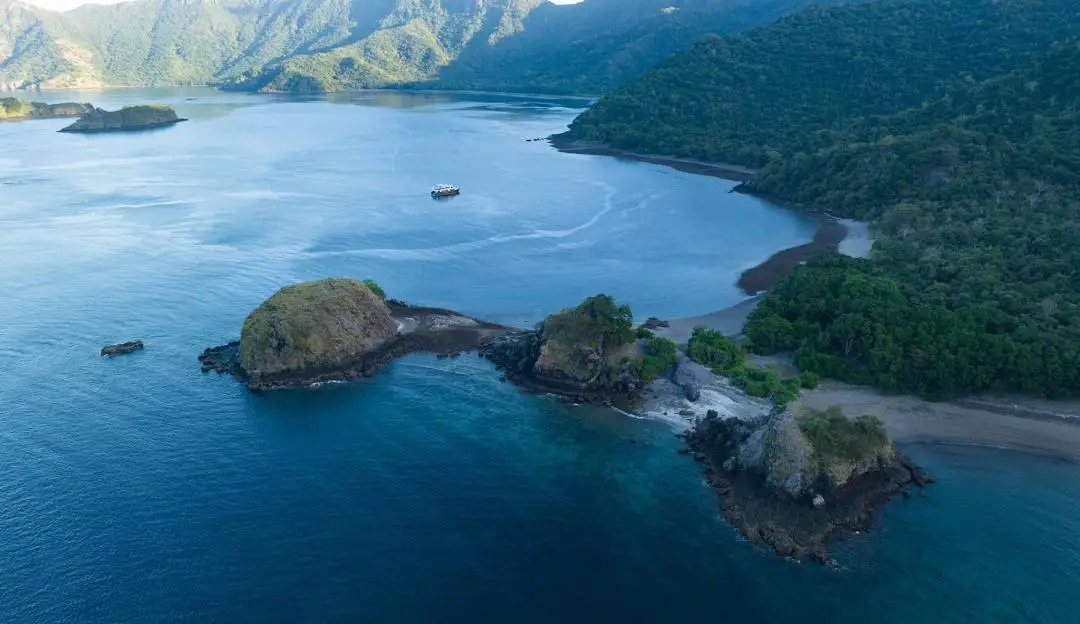
Pulau Rinca, recognized globally as Rinca Island, represents one of the most rugged and ecologically critical frontiers within Indonesia's famed Komodo National Park. Designated as a UNESCO World Heritage Site in 1991, this pristine island serves as a primary natural sanctuary for the legendary Komodo dragon, Varanus komodoensis, alongside a vibrant array of endemic terrestrial wildlife. For international travelers seeking a profound connection with prehistoric nature, Rinca Island offers an unparalleled blend of dramatic volcanic landscapes and world-class marine habitats.
To facilitate an elite, eco-conscious journey through this sensitive environment, the professional guiding team of The Seven Seas Group has compiled this comprehensive manual. Exploring the island's wilderness requires meticulous planning, a rigorous understanding of the local biological cycles, and strict adherence to modern conservation laws. By coordinating with experienced operators, visitors can safely navigate the complex land and marine ecosystems while supporting the preservation of this fragile paradise.
The Ecological Profile and Diverse Landscapes of Pulau Rinca
Rinca Island is situated within the West Manggarai Regency of East Nusa Tenggara, positioned strategically between the larger landmasses of Flores and Komodo Island. Spanning approximately 19,000 hectares, it is the second-largest island in the national park. The island's topography is characterized by a dramatic combination of coastal mangrove forests, sheltered bays, arid woodlands, and sweeping, sun-scorched savannas.
Savanna Ecosystems and Microclimates
The terrestrial scenery of Rinca Island is dominated by rolling grassy hills and open savanna ecosystems, which provide an ideal setting for wildlife photography and scientific observation. The region experiences a distinct dry tropical cycle. During the dry season, running from April to November, the savanna grass cures to a bright golden-yellow hue, emphasizing the primeval, arid beauty of the landscape.
With the arrival of the wet season between December and March, short but intense tropical showers transform the terrain into a lush, vibrant green canopy. This shifting cycle creates distinct microclimates across the island's lowlands and ridges, influencing the movements and behaviors of its inhabitants.
Dynamic Island Biodiversity
While the Komodo dragon remains the primary focus of scientific interest, Rinca Island supports a diverse food web of terrestrial animals. The grasslands and woodlands are home to large populations of Timor deer, wild boars, and massive water buffaloes, which serve as the primary prey for mature dragons.
A unique zoological feature of Rinca Island is the active presence of crab-eating macaques, a species of monkey that is entirely absent on neighboring Komodo Island. Additionally, the island's dry deciduous forests host rare avian species. Naturalists can spot the orange-footed scrubfowl, noisy friarbirds, imperial pigeons, and the critically endangered lesser sulphur-crested cockatoo nesting in the valley branches.
Island Characteristic | Pulau Rinca | Pulau Komodo |
|---|---|---|
Total Surface Area | Approximately 19,000 hectares | Approximately 39,000 hectares |
Dragon Population | Between 1,300 and 2,300 lizards | Approximately 1,000 to 1,300 lizards |
Primary Ranger Station | Loh Buaya | Loh Liang |
Daily Visitor Quota | Limited to 150 guests | Limited to 250 guests |
Endemic Macaque Species | Active groups of crab-eating macaques | Entirely absent |
Peak Mating Season | Occurs between July and August | Occurs between July and August |
Terrestrial Adventures and Critical Safety Measures at Loh Buaya
The primary entry point and harbor for expeditions to Rinca Island is Loh Buaya, which translates to Crocodile Bay in the local language, referencing the marine reptiles that inhabit the surrounding mangrove channels. For safety and ecological preservation, all onshore activities are strictly controlled.
The Biological Routine of the Komodo Dragon
To optimize wildlife viewing, travelers must align their excursions with the biological routine of the Komodo dragons. As cold-blooded reptiles, dragons rely on the sun to regulate their body temperature. In the early morning hours, between 07:00 and 10:00, they are highly active, emerging from their burrows to bask in open areas and slowly patrol the forest pathways.
During the intense midday heat, from 11:00 to 15:00, they seek shade under thick brush or near the cool foundations of the ranger buildings. As the air cools in the late afternoon, they resume hunting and territorial movements, providing photographers with excellent opportunities to capture their behavior in the golden light.
Essential Safety Protocols and Ranger Supervision
Due to the predatory nature of the Komodo dragon, which can grow up to 3 meters in length, weigh up to 300 pounds, and possess a venomous bite, independent hiking is strictly prohibited. Every visitor must be accompanied by a certified national park ranger equipped with a traditional forked wooden stick, which is highly effective at managing and redirecting approaching lizards.
Rangers enforce strict safety guidelines to protect both the tourists and the wildlife. Travelers must maintain a minimum distance of approximately 3 to 5 meters from any dragon and avoid sudden, rapid movements or loud noises that could trigger a defensive response. Flash photography is completely prohibited, as it can agitate the animals.
Furthermore, visitors are strictly forbidden from bringing any food onto the island, as the dragons' highly acute sense of smell can detect organic odors from miles away, creating potentially hazardous situations.
Special Medical and Physiological Advisories
An important physiological guideline concerns female visitors who are menstruating. Because of the Komodo dragon's extraordinary olfactory sensitivity, which is finely tuned to detect the scent of blood over vast distances, menstruating travelers must inform their park ranger prior to starting any trek. The guiding team can then implement enhanced spatial monitoring and discreetly adjust the group's positioning to guarantee absolute safety during the walk.
Essential Item | Operational Purpose | Regulatory and Safety Context |
|---|---|---|
Original Passport | Legal identity verification at park gates | Mandatory for all foreign tourists registering under the SiORA system |
Indonesian Rupiah Cash | Payment for local tips and minor transactions | On-site facilities do not have ATMs and card readers are frequently offline |
Breathable Long Sleeves | Defense against intense sun and biting insects | Long, lightweight garments protect skin and prevent the need for chemical sprays |
Sturdy Trekking Shoes | Traction on rugged, dry, and slippery paths | Flat soles are highly discouraged due to loose gravel on medium and long trails |
Reef Safe Sunscreen | Prevention of chemical-induced coral bleaching | Standard sunscreens contain oxybenzone which damages delicate marine ecosystems |
Hydration Flasks | Mitigation of tropical dehydration and heat stroke | The dry savanna climate has very little shade and high afternoon temperatures |
Infrastructure Developments and the Ecotourism Debate
Between 2020 and 2022, the Indonesian government initiated a series of infrastructure upgrades at Loh Buaya designed to elevate the region to a premium, world-class ecotourism destination, comparing the dragon's status to China's giant panda. This development project, which cost approximately IDR 69.9 billion, sought to replace aging facilities with modern, sustainable visitor management structures.
The Loh Buaya Elevated Boardwalk
The primary feature of this development is a massive elevated concrete and timber boardwalk system that spans 1.3 hectares of the primary habitat zone. Elevated 2 meters above the forest floor, the boardwalk connects the newly expanded 400 square-meter Loh Buaya dock with a 3,055 square-meter lodge for rangers and researchers, a 3,985 square-meter headquarters, the Niang Komodo museum, and an information center.
This elevated pathway allows tourists to observe the dragons and other wildlife from a safe, unobstructed vantage point, completely eliminating the danger of physical contact while preventing the soil compaction and erosion associated with foot traffic.
Ecological Backlash and the Conservation Balance
The project faced significant scrutiny and backlash from local environmental groups, activists, and former park rangers. Organizations such as Sunspirit for Justice and Peace and the Indonesian Forum for the Environment voiced concerns that massive concrete construction, heavy machinery, and the presence of a guest cafeteria would alter the dragons' natural behaviors and scramble their delicate olfactory senses.
Activists warned that the introduction of commercial facilities posed a threat of sensory pollution, which they termed a form of ecocide in a highly sensitive conservation zone.
In response to these concerns, park authorities and government representatives emphasized that the construction was executed under strict ecological supervision, ensuring that not a single tree was felled during the process. The environmental observation permits, finalized in September 2020, were designed to ensure that the infrastructure remained strictly confined to a tiny fraction of the island's 20,000 hectares, leaving the vast majority of the territory completely untouched as a pristine wilderness sanctuary.
Today, the completed infrastructure stands as a highly effective visitor-management tool, proving that thoughtful design can successfully separate human activities from the natural behaviors of the resident wildlife.
The SiORA Digital Booking System and Park Regulations
In April 2026, following a rigorous trialing phase, the Indonesian government fully implemented the SiORA system, a centralized digital reservation platform managed by the Ministry of Environment and Forestry. This regulatory update has completely transformed how travelers access the national park, shifting the tourism model from high-volume traffic to an exclusive, sustainable, low-impact system.
Daily Quotas and Land Excursion Sessions
To protect the fragile ecosystems of the park, a strict daily limit of 1,000 visitors is enforced across the entire reserve. For Rinca Island specifically, access to the Loh Buaya station is limited to only 150 visitors per day, while neighboring Padar Island is capped at 60 visitors daily. To prevent crowding, the daily quota is divided into three structured time sessions:
Session 1 (Early Morning): 05:00 to 08:00 WITA, ideal for catching active wildlife at sunrise.
Session 2 (Morning): 08:00 to 11:00 WITA, suitable for standard daytime trekking.
Session 3 (Afternoon): 15:00 to 18:00 WITA, popular for sunset walks and cooler temperatures.
Mandatory Pre-Registration and Digital Permits
All travelers, including day-trippers and liveaboard passengers, must pre-register through the SiORA platform using their passport details. Walk-in bookings are no longer available. Registrations must be completed at least 2 to 3 days prior to arrival, though booking several months in advance is highly recommended during the peak travel season between June and September.
Once payment is processed, the system generates a unique QR code that is scanned by park rangers at each entry gate. For guests traveling on luxury vessels like the Seven Seas, the cruise directors handle the entire registration and reservation process, securing the necessary quotas and permits before the cruise begins.
Subterranean Wonders and the Wainilu Muck Diving Haven
The aquatic environments surrounding Rinca Island are as rich and biologically diverse as its terrestrial savannas. Fed by the cool, nutrient-dense currents of the Indian Ocean and the warmer waters of the Pacific, the surrounding marine territory is a sanctuary for over 1,000 fish species and 260 coral types.
Topography and Marine Conditions of Wainilu
Directly across from the Rinca Island ranger station lies Wainilu, a shallow sandy slope that has earned a legendary reputation among international muck diving enthusiasts and macro photographers. Unlike the high-voltage drift dives of the northern seamounts, Wainilu offers a calm, sheltered environment.
The seafloor consists of a gentle gradient of dark volcanic sand, silt, and patches of dead coral rubble, with a depth range spanning 3 to 18 meters. Currents are generally minimal, allowing divers to hover close to the substrate and search for highly camouflaged marine life.
Because the silty bottom can easily be disturbed, maintaining excellent buoyancy control is essential to prevent reducing the underwater visibility.
Macro Treasures and the Dusk Mandarinfish Courtship
Wainilu is widely celebrated as Komodo's own mini Lembeh, harboring an extraordinary variety of rare, bizarre, and highly specialized marine critters. Expert dive guides frequently locate flamboyant cuttlefish pulsing with color as they walk across the sand, mimic octopuses, wunderpus, blue-ringed octopuses, and several species of frogfish.
Crinoid-mimicking ornate ghost pipefish, harlequin shrimp feeding on sea stars, bobtail squid, and a massive variety of colorful nudibranchs find shelter within this unique habitat.
At dusk, Wainilu becomes the stage for a spectacular natural event. Brilliantly patterned mandarinfish emerge from the shallow coral rubble to perform their legendary mating dance, rising slowly into the water column to spawn before darting back into the safety of the reef. This delicate, vibrant courtship is a highly sought-after encounter for marine naturalists and underwater photographers alike.
Marine Temperature Discrepancies
The geographic positioning of Komodo National Park creates sharp contrasts in water temperatures between the northern and southern sectors. The northern marine zones, influenced by the warm waters of the Flores Sea, maintain comfortable temperatures ranging from 27 to 29 degrees Celsius.
In contrast, the southern regions, including Horseshoe Bay and Manta Alley, are subject to deep, cold ocean upwellings from the Indian Ocean, causing water temperatures to drop as low as 22 to 26 degrees Celsius. Divers exploring both zones are advised to prepare appropriate thermal protection, such as a 3mm to 5mm wetsuit, to ensure comfort across these varying marine climates.
Luxury Marine Expeditions with the Seven Seas Schooner
To navigate the dynamic waters and remote destinations of Komodo National Park with absolute safety and comfort, a well-equipped, ocean-going vessel is essential. The Seven Seas is a custom-designed, 40-meter Buginese phinisi schooner built traditionally from Indonesian ironwood and teak.
With decades of experience and a flawless safety record, the vessel provides a stable, luxurious platform from which guests can explore the very best of Rinca Island and the surrounding marine park.
Technical Specifications and Onboard Comforts
The Seven Seas is engineered to provide an exceptional balance of luxury, utility, and safety over three expansive timber decks. Powered by a robust Mitsubishi V8 450HP engine, the schooner maintains a cruising speed of 8 knots, supported by dual freshwater-makers producing 9 tons of fresh water daily and an 18-ton fuel capacity.
The vessel accommodates up to 16 passengers in 8 beautifully appointed en-suite cabins. The accommodations consist of 4 double cabins with king-size beds and 4 twin cabins featuring comfortable single bunks, all equipped with individual air conditioning, powerful hot and cold water showers, and hair dryers.
The main deck features an air-conditioned salon and dining lounge, complete with a specialized camera preparation and editing table for photographers, while the open-air upper decks offer shaded daybeds, loungers, and space for professional massage therapy between adventures.
Professional Crew and Specialized Diving Support
The yacht is operated by a dedicated, highly trained crew of 15 to 20 professional mariners, including two experienced cruise directors and first-rate local dive guides who ensure a highly personalized, secure, and educational journey. The dive deck is exceptionally well-organized, featuring a modern Nitrox membrane system, dual compressors, 24 aluminum tanks, and dedicated gear storage lockers.
To facilitate safe landings and excursions, the schooner utilizes three tenders, including two 6.5-meter fiberglass speedboats powered by twin-40hp engines and one inflatable tender.
For shallow coastal exploration, the vessel also carries six double sea kayaks, allowing guests to quietly paddle through Rinca's pristine mangrove bays and search for wildlife along the shoreline. Onboard safety is fully supported by modern navigation systems, two 20-person life rafts, 50 life jackets, and an Automated External Defibrillator, ensuring peace of mind throughout the voyage.