
Exploring the Green Wonders of Solohana Forest in Labuan Bajo
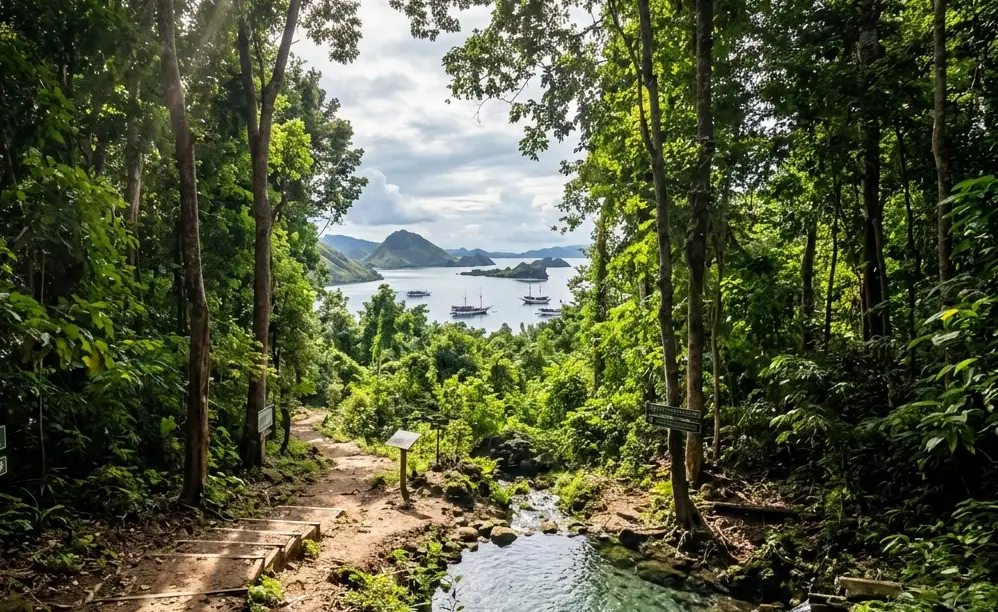
Labuan Bajo is famous worldwide as the primary gateway to Komodo National Park. Most international travelers visit this western tip of Flores Island to see the legendary Komodo dragons in their natural habitat or hike the iconic, sun-kissed hills of Padar Island. However, global tourism is shifting rapidly toward sustainability and regenerative travel, where visitors seek to leave a positive ecological footprint. Amidst the massive popularity of marine tourism, Western Flores harbors a magnificent terrestrial sanctuary known as Solohana Forest.
As professional tour guides from The Seven Seas Group, we take immense pride in introducing destinations that offer both breathtaking beauty and meaningful ecological value. Solohana Forest is a living testament to how human dedication can restore a completely degraded ecosystem. Located in Solohana Hamlet, Batu Cermin Village, Komodo District, this forest sits just five kilometers northeast of the main harbor in Labuan Bajo. This strategic location makes it the perfect inland warm-up adventure, allowing your body to acclimatize to the tropical climate before you embark on a luxury voyage aboard our signature phinisi yachts.
The Ecological Transformation of Solohana Forest from Stony Hills to Lush Rainforest
The existence of Solohana Forest today is an ecological miracle born from decades of relentless hard work and community spirit. Before becoming the lush sanctuary it is today, this twelve-hectare area was a barren, rocky hill covered only in thorny shrubs and baked by the intense equatorial sun. Coupled with the extreme dry season of Western Flores that stretches from April to November, planting trees here was initially deemed impossible by traditional forestry standards.
This extraordinary initiative was started in the year 2000 by Father Marsel Agot, SVD. He is a local Catholic priest and environmental activist who was deeply concerned by the rapid land degradation and loss of water catchments around Labuan Bajo. During the initial planting phases, the physical challenges were immense. Local volunteers and workers had to physically carry heavy jerry cans of water up the steep, jagged slopes from outside the area just to keep the fragile saplings alive on the parched rocky terrain.
The Natural Emergence of Freshwater Springs
After more than two decades of meticulous care and protection from wildfires, the roots of the growing trees began to work their magic. These powerful root systems slowly fractured the dense, impermeable volcanic rocks beneath the soil, creating natural channels for rainwater infiltration. Over time, the overall soil structure improved, organic leaf litter accumulated, and the ground-level water retention capacity increased dramatically. By 2016, approximately eight hectares of the total area had been fully covered by a dense green canopy.
This canopy restoration triggered an incredible hydrological recovery. The restored watershed eventually gave birth to two natural freshwater springs within the forest. Amazingly, both springs now flow continuously throughout the year, even during the peak of the Flores dry season when surrounding areas face severe water shortages. The emergence of these springs has completely transformed the microclimate of Solohana Hamlet, providing a reliable source of clean water for the local community and proving that well-planned reforestation can revive dormant aquifers.
Botanical Preservation of Rare Flores Hardwoods
One of the primary missions of Solohana Forest is to rescue native hardwood tree species that are threatened with extinction due to decades of illegal logging and agricultural clearing in the Manggarai region. As Labuan Bajo grew, the demand for local timber skyrocketed, putting immense pressure on the surrounding forests. Inside this botanical sanctuary, visitors can observe several high-value timber species growing safely, including Mahogany, Kawak, Loi, Nara, and Aernana.
Propagation Breakthrough for the Rare Munting Tree
One of the most significant horticultural achievements in Solohana Forest is the successful conservation of the Munting tree. Historically, Munting wood was highly sought after by the indigenous people of Flores for its exceptional strength and density, making it the preferred material for building traditional high-pitched clan houses (Mbaru Niang) and heavy wooden mortars. Consequently, overexploitation led to its near-extinction by the late 20th century, leaving very few mature specimens in the wild.
Traditional forestry consensus held that the Munting tree could only grow from wild seeds, which have an extremely low germination rate due to their tough outer shells. However, through years of patient trial and error, Father Marsel Agot developed a successful vegetative propagation technique using stem cuttings. This horticultural breakthrough has opened new possibilities for conserving endangered hardwoods across the Lesser Sunda Islands, allowing conservationists to actively replant this culturally significant species.
The table below outlines the key tree species flourishing in Solohana Forest and their vital roles in the local ecosystem:
Native Tree Name | Botanical Profile and Growth Characteristics | Ecological and Cultural Function |
|---|---|---|
Mahogany | Fast-growing hardwood with a broad, dense canopy that blocks intense sunlight. | Suppresses weed growth, stabilizes topsoil, and provides excellent shade for visitors. |
Kawak | Slow-growing local hardwood highly adapted to semi-arid and rocky conditions. | Enhances forest structure diversity and serves as a nesting habitat for wild birds. |
Nara | Deep-rooted forest tree characterized by heavy leaf litter production throughout the year. | Enriches topsoil humus, prevents moisture evaporation, and feeds the forest floor. |
Loi | Highly resilient species capable of growing on steep, rocky hillsides with minimal soil. | Prevents soil erosion and devastating landslides along the undulating terrain of Solohana. |
Aernana | Hardwood with an exceptional root system optimized for moisture binding. | Serves as a watershed protector that directly feeds the underground aquifers. |
Munting | Extremely rare and protected hardwood native to the Flores mainland. | Successfully propagated via stem cuttings to ensure species survival and forest diversity. |
Archaeological Heritage of Verhoeven Cave at Batu Cermin
The appeal of Solohana Forest extends beyond its rich biodiversity. The forest boundary connects directly with the entrance of Verhoeven Cave, which is widely known among locals and travelers as Batu Cermin Cave, meaning Mirror Rock Cave. This close geographical proximity seamlessly connects nature conservation with the historical discoveries of human evolution on Flores Island.
The cave is named after Father Theodor Verhoeven, SVD, a Dutch Catholic missionary and archaeologist who served in Flores during the mid-20th century. Missionaries from the Society of the Divine Word (SVD) have played a significant historical role in the West Manggarai region since 1914. Alongside their pastoral duties, many of these missionaries were highly trained academics who dedicated their lives to researching dozens of prehistoric sites across Flores, including the famous Liang Bua cave.
The Global Scientific Impact of Father Theodor Verhoeven
Verhoeven's most groundbreaking research occurred in the Soa Basin of Central Flores during the 1950s and 1960s. There, he discovered ancient stone tools alongside the fossilized remains of Stegodon, an extinct prehistoric elephant. Based on the geological layers where these items were found, he argued that early hominins must have possessed the cognitive and physical ability to cross the deep ocean barriers of the Wallace Line to reach Flores approximately 750,000 years ago.
Although his revolutionary theories were initially met with deep skepticism by the global scientific community, subsequent excavations in the late 1990s validated his hypotheses. This pioneering work ultimately paved the way for the monumental discovery of the diminutive human species, Homo floresiensis, at Liang Bua in 2003.
At the Batu Cermin Cave site adjacent to Solohana Forest, travelers can observe the archaeological excavation trenches where Verhoeven unearthed early human skull fragments and ancient stone tools. Today, the cave is highly popular for its stunning limestone corridors, active stalactites, and fossilized marine life embedded in the rock walls, proving that this mountainous region of Labuan Bajo was once submerged deep beneath the ocean.
The table below summarizes the key historical milestones connecting the Solohana area with global scientific research:
Historical Era | Key Figures and Organizations | Archaeological and Ecological Milestone | Regional and Global Impact |
|---|---|---|---|
1910 to 1914 | Jesuit Missionaries | Early establishment of Catholic missions and basic schools in West Manggarai. | Established administrative and logistical networks that supported future academic research. |
1914 onward | Society of the Divine Word (SVD) | SVD missionaries assume responsibility for education, social services, and research in Flores. | Brought highly educated clergy, including geologists, archaeologists, and botanists, to the region. |
1950s to 1960s | Father Theodor Verhoeven, SVD | Excavations at Batu Cermin and discovery of Stegodon fossils in the Soa Basin. | Provided the first scientific evidence of hominin maritime migration before the discovery of the Flores Hobbit. |
Year 2000 | Father Marsel Agot, SVD | Launched the Solohana Forest reforestation project on barren, rocky terrain. | Transformed a dry, unproductive hill into a thriving rainforest ecosystem and community asset. |
Year 2016 | Local Community and SVD | Solohana Forest expands to twelve hectares with a dense, healthy canopy. | Restored the local water table, resulting in two permanent freshwater springs for the village. |
Practical Travel Guide to Solohana Forest with Seven Seas Group
To deliver a seamless travel experience, The Seven Seas Group designs integrated itineraries that combine inland excursions with luxury sea voyages. We highly recommend our guests explore Solohana Forest and Batu Cermin Cave first to understand the terrestrial ecology of Flores, before boarding our vessels to discover the marine wonders of Komodo National Park. Walking through the shaded trails of Solohana helps reduce travel fatigue, lower cortisol levels, and adjust your body to the equatorial humidity.
To ensure a comfortable and safe journey, you should plan your trip around local seasonal patterns. The best time to explore Western Flores is during the dry season, which runs from mid-April to mid-November. During these months, the forest trekking trails are dry, firm, and stable. The period from May to August is particularly pleasant due to lower humidity levels and cool evening breezes flowing from the Australian continent.
Conversely, the wet season from November to March brings heavy rainfall, which can make the forest clay trails muddy and the cave steps slippery. However, the rainy season also transforms the entire landscape of Western Flores into a vibrant, emerald green paradise that is exceptionally beautiful to photograph, offering a completely different but equally magical perspective of the region.
The table below serves as a practical guide for travelers planning to visit Solohana and other nearby land destinations around Labuan Bajo:
Destination and Activity | Difficulty Level | Recommended Gear | Key Highlights | Best Time to Visit |
|---|---|---|---|---|
Solohana Forest Trekking | Easy to Moderate | Sturdy walking shoes, breathable clothing, light socks, and insect repellent. | Shade of ancient mahogany trees, rare Munting trees, and natural freshwater springs. | Early morning (08.00 to 10.00) when the air is cool and wild birds are most active. |
Batu Cermin Cave Exploration | Easy | Non-slip closed shoes, a reliable flashlight, and a safety helmet provided at the entrance. | Active stalactites, ancient marine fossils, and historic archaeological trenches. | Late morning (10.00 to 12.00) when sunlight penetrates deep into the cave chambers. |
Rangko Cave Excursion | Moderate | Swimwear, quick-dry towel, water shoes, and reef-safe sunscreen. | Swimming in a crystal-clear, deep blue saltwater pool inside a majestic limestone cavern. | Midday (12.00 to 14.00) when the sun is directly overhead, illuminating the pool. |
As a super-priority tourism destination, Labuan Bajo continues to develop sustainable infrastructure that respects the local environment. Solohana Forest stands as a prime example of how grassroots conservation can successfully restore degraded ecosystems while offering educational travel experiences. Let us explore the beauty of Western Flores responsibly with The Seven Seas Group.